
Sales trigger: opening and closing your sales
Use sales triggers if you want ticket sales to open or close at a specific time or when certain conditions are met. This is useful for pre-sales, limited-time drops, or managing last entry sales. Once set, sales triggers work automatically.
1. What a sales trigger does
A sales trigger defines when ticket sales become available and when they stop.
With sales triggers, you can:
Schedule when sales open
Schedule when sales close
Avoid manual activation or deactivation
Triggers apply at event level and affect all linked tickets.
2. Opening ticket sales
You can set a trigger to automatically open sales.
Go to your event in XCEED Pro and click on edit.
On the offers tab click to edit any existing offer
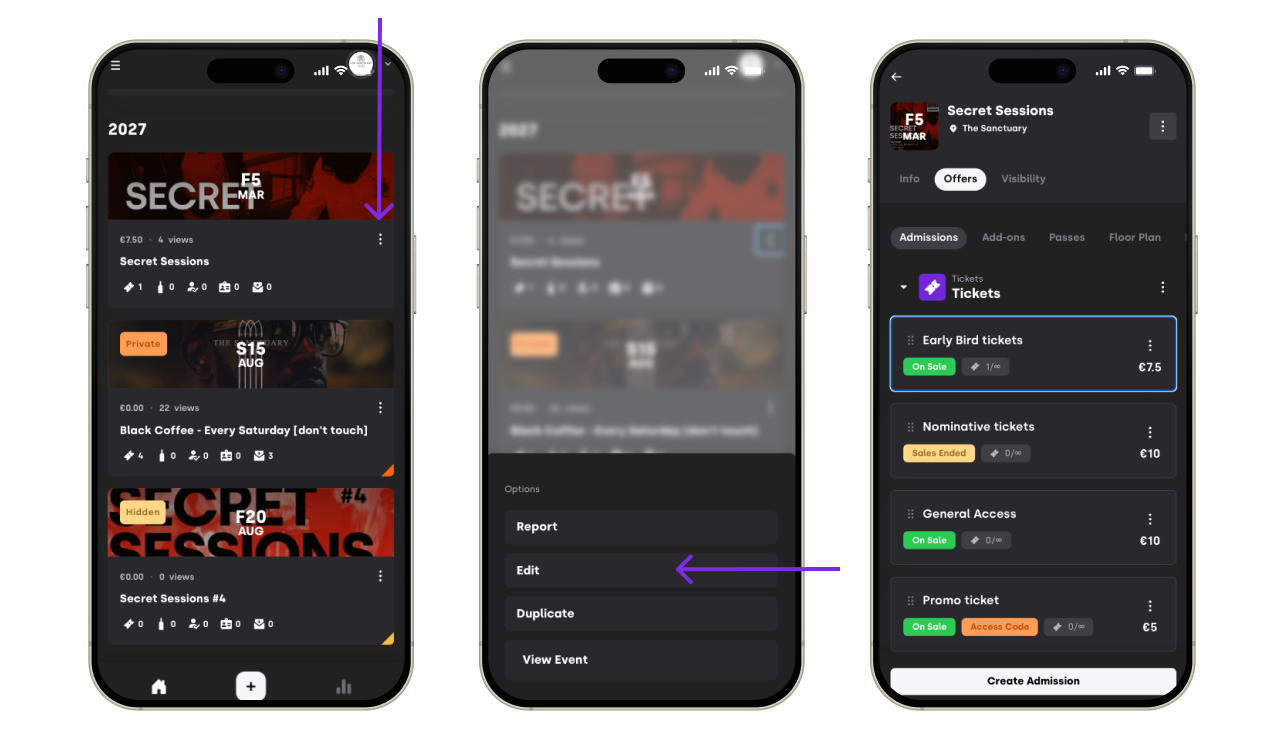
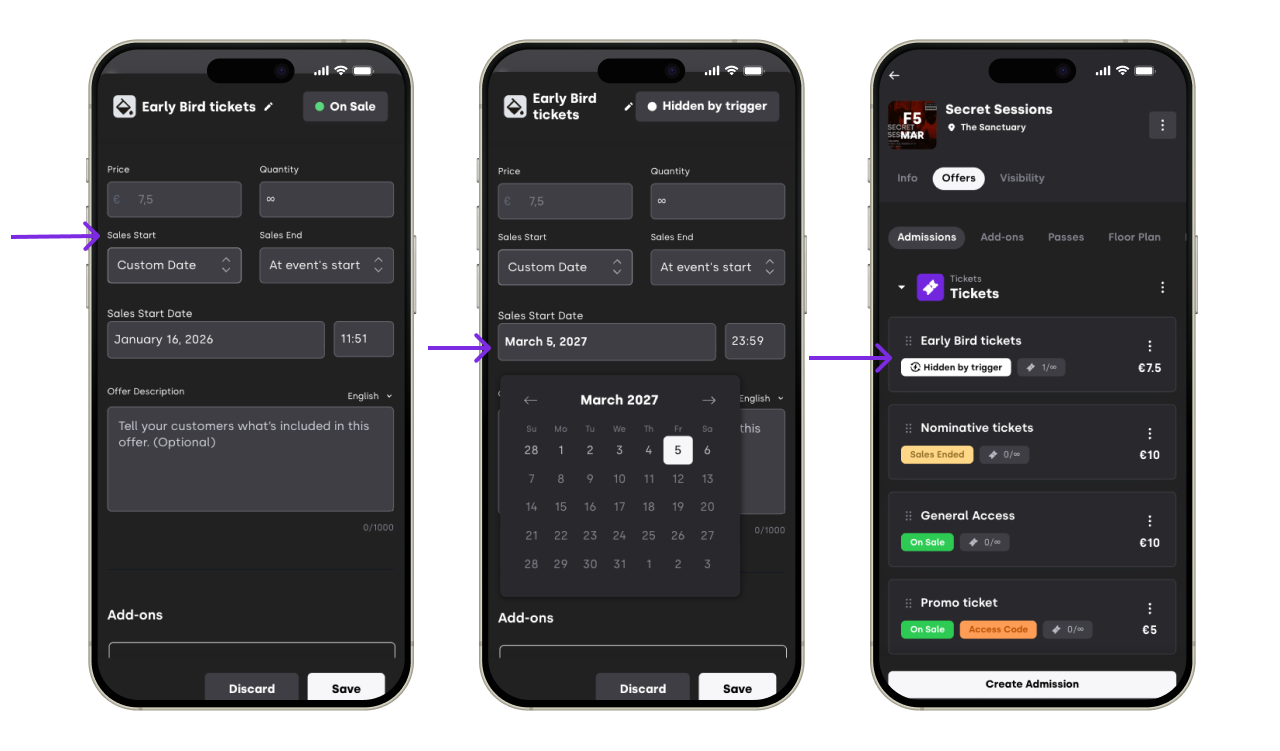
Choose how sales should open:
At a specific date and time
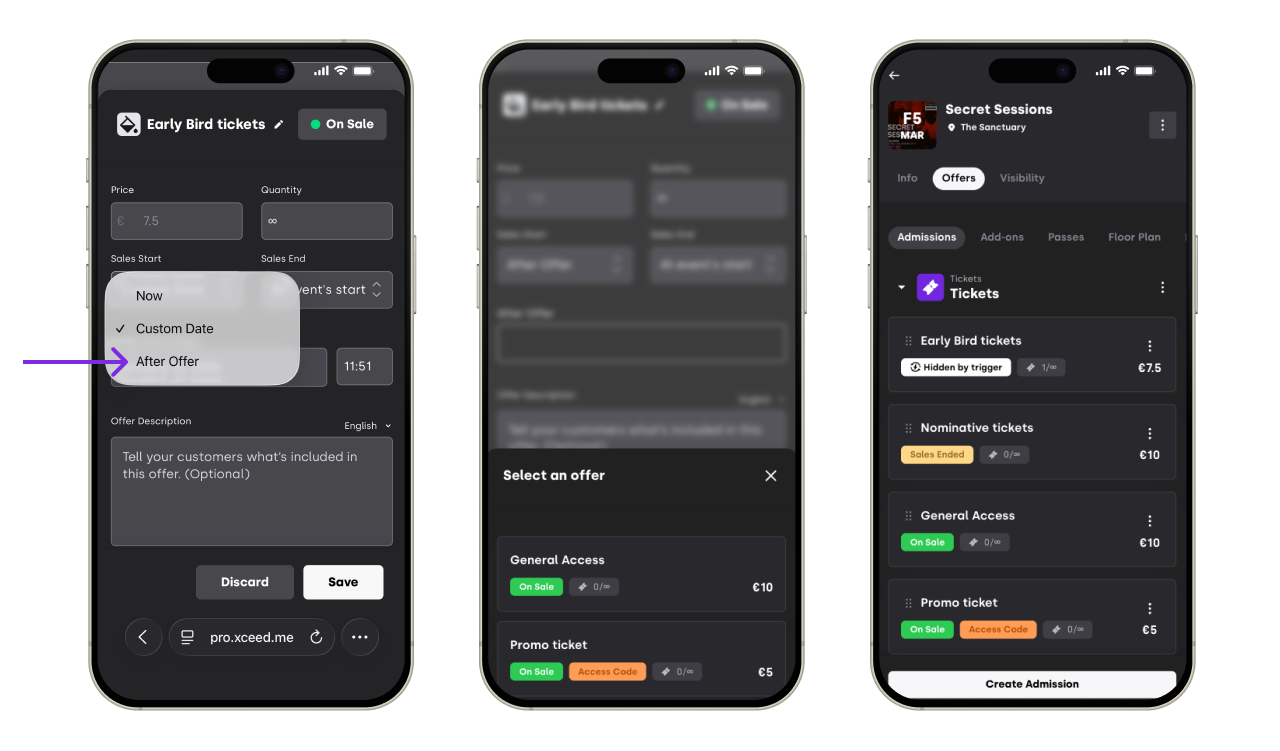
After another offer is sold out or closed
Save your changes and you offer will appear "Hidden my trigger". Once the trigger is reached, ticket sales open automatically.


3. Closing ticket sales
You can also define when ticket sales should close by following the same steps. There are three possible options:
At a specific date and time
When the event starts
When the event ends
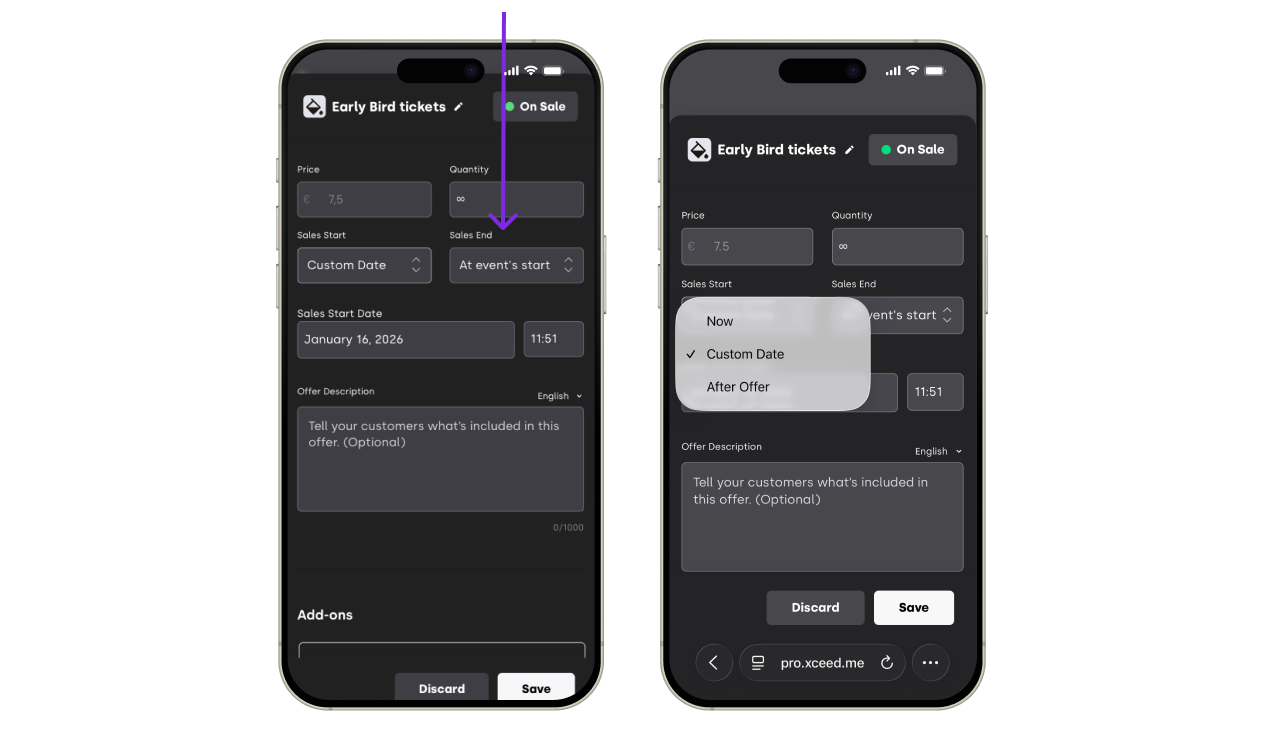

Choose the option that best fits your event operations and entry policy.
4. Offer quantity limits and venue capacity
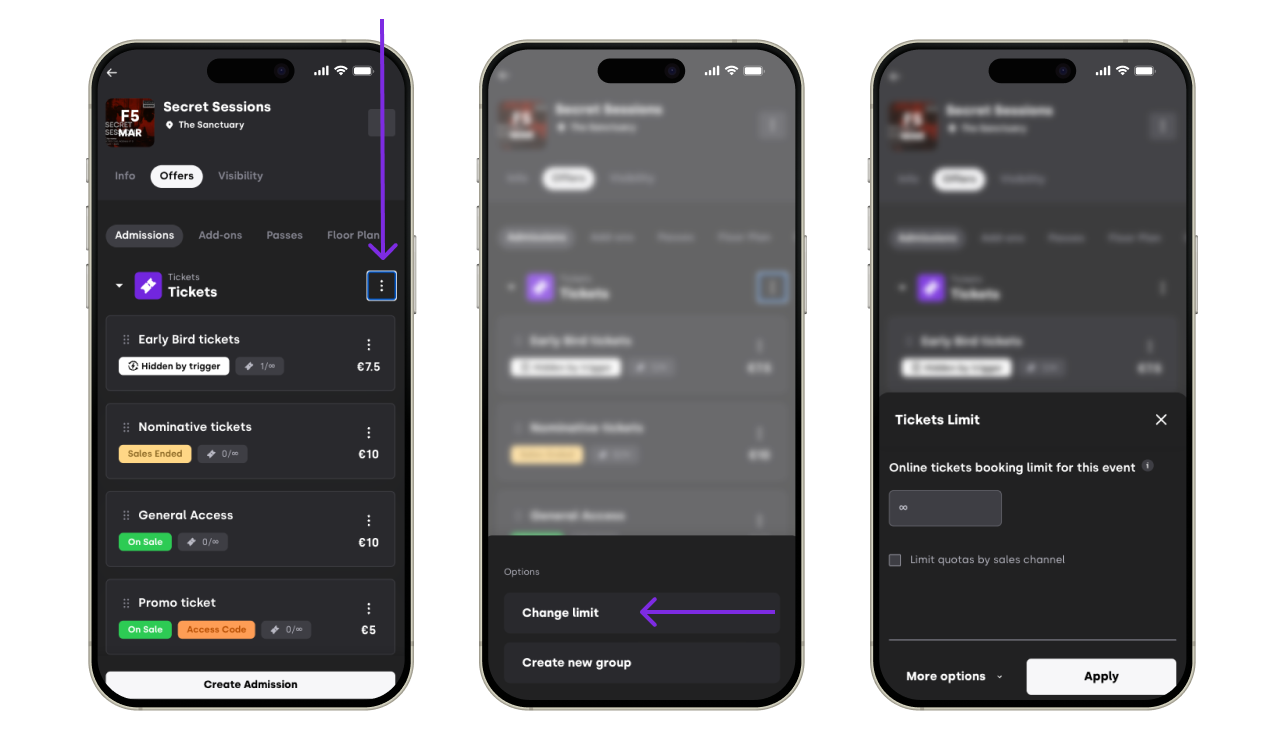
Ticket availability can also be controlled by quantity limits due to venue capacity.
You can:
Set a maximum quantity per offer/ticket type
Control total tickets sold across all offers
Align ticket quantities with your venue’s legal capacity
Once the quantity limit is reached, tickets automatically stop selling, even if sales are still open. This helps prevent overselling and keeps your event compliant with venue capacity limits.
5. Common use cases
Sales triggers and quantity limits are commonly used for:
Pre-sales followed by general admission
Early bird tickets that unlock the next offer
Closing sales before doors open
Ensuring total ticket sales don’t exceed venue capacity
Together, they give you full control over your ticket lifecycle.
If you have any other questions check our FAQ page or contact support@xceed.me